World Literature Timeline

Invention of
Writing and Earliest Literature [Beginnings to 100 A.D.]
- Writing was not invented for the purpose of preserving literature; the earliest written documents contain commercial, administrative, political, and legal information, and were created by the first "advanced" civilizations in an area that Westerners commonly call the Middle East.
- The oldest writing was pictographic, meaning that
the sign for an object was written to resemble the object itself; later,
hieroglyphic and cuneiform scripts were invented to record more
complicated information.
- Begun in 2700 B.C. and written down about 2000
B.C., the first great heroic narrative of world literature, Gilgamesh,
nearly vanished from memory when it was not translated from cuneiform
languages into the new alphabets that replaced them.
- Though the absence of written signs for vowels can
confuse some readers, the consonantal script developed by the Hebrews
ushered in a new form of writing that could be composed without special
artistic skills and read without advanced training.
- With their return to Palestine in 539 B.C., the
Hebrews rebuilt the Temple and created the canonical version of the
Pentateuch, the first five books of the Bible.
- As the stories in the Bible expound, unlike
polytheistic religions in which gods often battle among themselves for
control over humankind, the sole resistance to the Hebrew God is humankind
itself.
Ancient Greece [Beginnings
to 100 A.D.]

- Though the origin of the Hellenes, or ancient
Greeks, is unknown, their language clearly belongs to the Indo-European
family.
- By serving as a basis for education, the Iliad and Odyssey played
a role in the development of Greek civilization that is equivalent to the
role that the Torah had played in Palestine.
- The Greeks who established colonies in Asia adapted
their language to the Phoenician writing system, adding signs for vowels
to change it from a consonantal to an alphabetic system.
- Before its defeat to Sparta, Athens developed
democratic institutions to maintain the delicate balance between the
freedom of the individual and the demands of the state.
- Unlike the Sophists, Socrates proposed a method of
teaching that was dialectic rather than didactic; his means of approaching
"truth" through questions and answers revolutionized Greek
philosophy.
- The basis for Homer's Iliad and Odyssey was
an immense poetic reserve created by generations of singers who lived
before him.
- Neither the Iliad nor the Odyssey offers
easy answers; questions about the nature of aggression and violence are
left unanswered, and questions about human suffering and the waste
generated by war are left unresolved.
- Greek comedy and tragedy developed out of choral
performances in celebration of Dionysus, the god of wine and mystic
ecstasy.
Poetry and
Thought in China [Beginnings to 100 A.D.]

- Chinese civilization first developed in the Yellow
River basin.
- The Classic of Poetry is a lyric
poetry collection that stands at the beginning of the Chinese literary
tradition.
- The fusion of ethical thought and idealized Chou
traditions associated with Confucius were recorded in the Analects by
Confucius's disciples following his death.
- The Chuang Tzu offers
philosophical meditations in a multitude of forms, ranging from jokes and
parables to intricate philosophical arguments.
- During the period of the Warring States, Ssu-ma Ch'ien produced
the popular Historical Records chronicling the lives of
ruling families and dynasties in a comprehensive history of China up to
the time of Emperor Wu's reign.
- The end of ancient China is often linked with the
rise of the draconian ruler Ch'in Shih-huang.
India’s
Heroic Age [Beginnings to 100 A.D.]

- The ethnic, religious, and linguistic diversity of
India's billion people has given rise to a diverse written and oral
literary tradition that evolved over 3,500 years.
- The Vedas are the primary
scriptures of Hinduism and consist of four books of sacred hymns that are
typically chanted by priests at ceremonies marking rites of passage.
- The Upanisads argue that the soul
is a manifestation of a single divine essence; release comes from
understanding the basic unity between the self and the universe.
- Two epics that express the core values of Hinduism
are the Ramayana and the Mahabharata.
- Dharma is the guiding principle of
human conduct and preserves the social, moral, and cosmic integrity of the
universe. It refers to sacred duties and righteous conduct, and is related
to three other spheres that collectively govern an ideal life: artha (wealth,
profit, and political power); kama (love,
sensuality); moksa (release, liberation).
- The belief that all beings are responsible for
their own actions and their own suffering is known as karma.
- Because Buddhism was a more egalitarian and
populist religion, it initially gained a following among women, artisans,
merchants, and individuals to whom the ritualistic and hierarchical nature
of Hinduism seemed constraining.
- Because Hinduism and its important texts such as
the Bhagavad-Gita were able to synthesize tenets and
ideas from the other religions, it was able to triumph in India.
- The idea that moral and spiritual conquest is
superior to conquest by the sword is an enduring motif of the time and one
that was publicly endorsed by Emperor Asoka.
The Roman
Empire [Beginnings to 100 A.D.]
- With its military victories in North Africa, Spain,
Greece, and Asia Minor, the social, cultural, and economic life of Rome
changed profoundly.
- After the fall of the Roman empire, the concept of
a world-state was appropriated by the medieval Church, which ruled from
the same center, Rome, and laid claim to a spiritual authority as great as
the secular authority it succeeded.
- Literature in Latin began with a translation of the
Greek Odyssey and continued to be modeled after Greek
sources until it became Christian.
- The lyric poems that Catullus wrote about
his love affair with the married woman he called Lesbia range in
tone from passionate to despairing to almost obscene.
- Left unfinished at the time of his death,
Virgil's Aeneid combines the themes of the Homeric epics:
the wanderer in search of a home from the Iliad, and the hero
at war from the Odyssey.
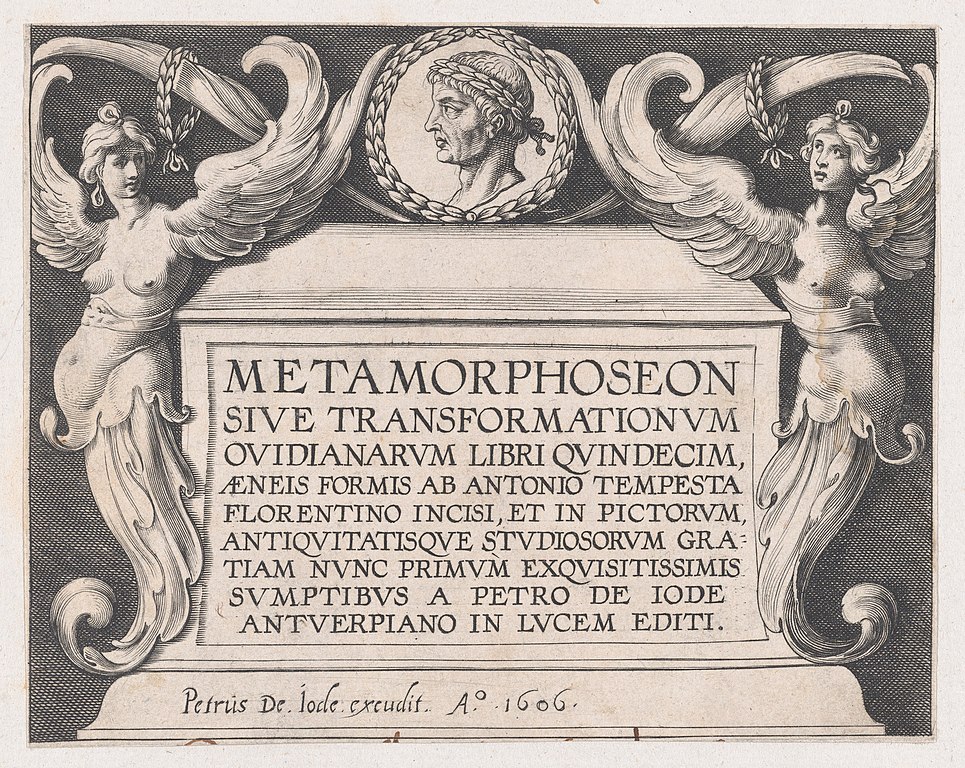
- Ovid's extraordinary subtlety and psychological
depth make his poetry second only to Virgil's for its influence on Western
poets and writers of the Middle Ages, the Renaissance, and beyond.
- Probably written by Petronius, and probably
written during the principate of Nero, the Satyricon is
a satirical work about the pragmatism and materialism of the Roman empire
that would soon be supplanted by Christianity.
Roman
Empire -> Christian Europe [100 A.D. to 1500]
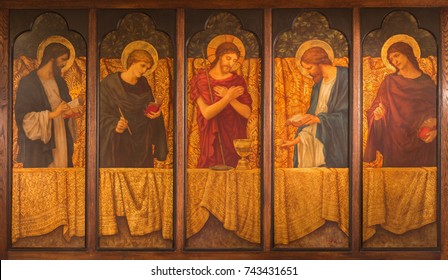
- The life of the Hebrew prophet Jesus ended in the
agony of the crucifixion by a Roman governor, but his teachings were
written down in the Greek language and became the sacred texts of the
Christian church.
- The teachings of Jesus were revolutionary in terms
of Greek and Roman feeling, as well as the Hebrew religious tradition.
- Until Constantine issued the Edict of Milan,
declaring tolerance for all religions, in 313, the Christian church was
often persecuted by imperial authorities, particularly under the rule of
emperors Nero, Marcus Aurelius, and Diocletian.
- The four Gospels were collected with other
documents to form the New Testament, which Pope Damasus had
translated from Greek to Latin by the scholar Jerome in 393–405.
- In his Confessions, Augustine sets down
the story of his early life for the benefit of others, combining the
intellectual tradition of the ancient world and the religious feeling that
would come to be characteristic of the Middle Ages.
India’s
Classical Age [100 A.D. to 1500]

- During the rule of the Guptas in ancient
India, great achievements were made in mathematics, logic, astronomy,
literature, and the fine arts.
- Classical Sanskrit literature deals extensively
with courtly culture and life. Aiming to evoke aesthetic responses, many
of the works admitted into the literary canon were poetic works written
and performed by learned poets (kavi) who were under the
patronage of kings. A highly stylized form of poetry, kavya literature
consists of four main genres—the court epic, short lyric, narrative, and
drama.
- In contrast to the elegant and formal works of
the kavya genre are two important collections of tales
that have influenced tales around the world—the Pañcatantra and
the Kathasaritsagara.
- Women in classical literature are rarely portrayed
as one-dimensional characters who are victims of circumstance.
- The kavya tradition is concerned
with the universe and ideals. Heroes and heroines are rarely individuals;
rather, they represent "universal" types.
China’s
Middle Period [100 A.D. to 1500]
![CHINA'S "MIDDLE AGES" [ 220-589 ] | China Mike](https://t16lxaj58e-flywheel.netdna-ssl.com/wp-content/uploads/2011/01/mongol-horsemen-small.jpg)
- The "middle period" of Chinese literature
occupies a central place in that nation's cultural history; to many it is
the era during which Chinese thought and letters achieved its highest
form.
- During China's "middle period,"
Confucianism declined in importance; Taoism and Buddhism in fact began to
acquire a more important status. With an emphasis on personal salvation,
they offered an alternative to the Confucian ideals of social and ethical
collective interests.
- Because of the way that it was integrated into life
during this period, the T'ang Dynasty is often considered a
period when poetry flourished.
- Thanks to the development of printing, the
vernacular traditions emphasizing storytelling have coexisted and evolved
along with classical literature up to present times.
Islam [100
A.D. to 1500]
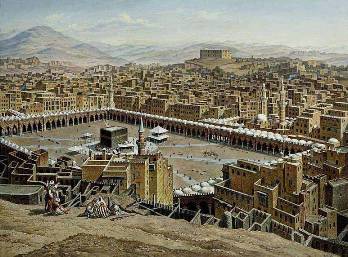
- God's revelations were first received around 610 by
the prophet Muhammad, whose followers later collected them into the Koran,
which became the basis for a new religion and community known today as
Islam.
- Though most of the pre-Islamic literature of Arabia
was written in verse, prose became a popular vehicle for the dissemination
of religious learning.
- As its title "the Recitation" suggests,
the Koran was made to be heard and recited; because it is literally the
word of God, Muslims do not accept the Koran in translation from Arabic.
- Although Persian literature borrowed from Arabic
literary styles, it also created and enhanced new poetic styles, including
the ruba'i (quatrain), ghazal (erotic
lyric), and masnavi (narrative poem).
- More widely known than any other work in Arabic,
the Thousand and One Nights is generally excluded from
the canon of classical Arabic literature due to its extravagant and
improbable fabrications in prose, a form that was expected to be more
serious and substantial than verse.
Formation of
Western Literature [100 A.D. to 1500]

- Contrary to popular belief, the medieval period
cannot be characterized as entirely barbaric. During this period, national
literatures in the vernacular appeared.
- Due to their disparate influences, literature and
culture in medieval Europe were very diverse, drawing from different,
often conflicting sources.
- Composed around 850, the Anglo-Saxon poem Beowulf speaks
about the warring lifestyle of the Germanic and Scandinavian groups that
conquered the Roman empire.
- Not only does the Song of Roland set
the foundation for the French literary tradition, but it also establishes
the narrative about the foundation of France itself.
- Writing in the twelfth century, Marie de France
helped establish the major forms and themes of vernacular literature,
especially for what we now call romances, novelistic narrative's that deal
with adventure and love.
- The thirteenth-century story Thorstein the
Staff-Struck is a short example of the Icelandic saga tradition
that speak's about the lives of men and women who lived in
Iceland and Norway between the ninth and eleventh centuries.
- Beginning in Provence around 1100, the
love lyric spread to Sicily, Italy, France, Germany, and eventually
England.
- The Divine Comedy offers Dante's
controversial political and religious beliefs within a formal and
cosmological framework that evoke's the three-in-one of the
Christian Trinity: God the Father; God the Son; and God the Holy Spirit.
- Best known for his Decameron,
Giovanni Boccaccio was one of the many medieval writers who
contributed to the revival of classical literary traditions that would
come to fruition in the Italian Renaissance and later spread to other parts
of Europe.
- Sir Gawain and the Green Knight revives
the "native" Anglo-Saxon tradition first seen in Beowulf that
had apparently been submerged between the twelfth and fourteenth centuries
following the Norman Conquest.
- Although Chaucer's Canterbury Tales does
not appear to be overtly political, it was written during a period of
considerable political and religious turmoil that would eventually give
rise to the Protestant Reformation.
- Anonymously written plays such as Everyman focused
on morality or were dramatic enactments of homilies and sermons.
Golden Age of
Japanese Culture [100 A.D. to 1500]
- Although Japanese poetry, drama, literature and
other writings of the Golden Age elaborate on a wide range of
philosophical, aesthetic, religious, and political topics, and while
literature and culture have flourished in Japan for over a thousand years,
many misconceptions about Japanese literature persist.
- One of the earliest monuments of Japanese
literature, the Man'yoshu (The Collection of Ten Thousand
Leaves), appears to have been intended as an anthology of poetry
anthologies.
- The Kokinshu combines great poems
of the past with great poems of the present; it also integrates short
poems into longer narrative sequences, thereby becoming more than a mere
collection of poems.
- Murasaki Shikibu's Tale of Genji,
arguably the first significant novel in world literature, was written in
the early eleventh century.
- The Pillow Book is a seemingly
unstructured collection of personal observations, random thoughts, and
perceptions that entered the mind of the author.
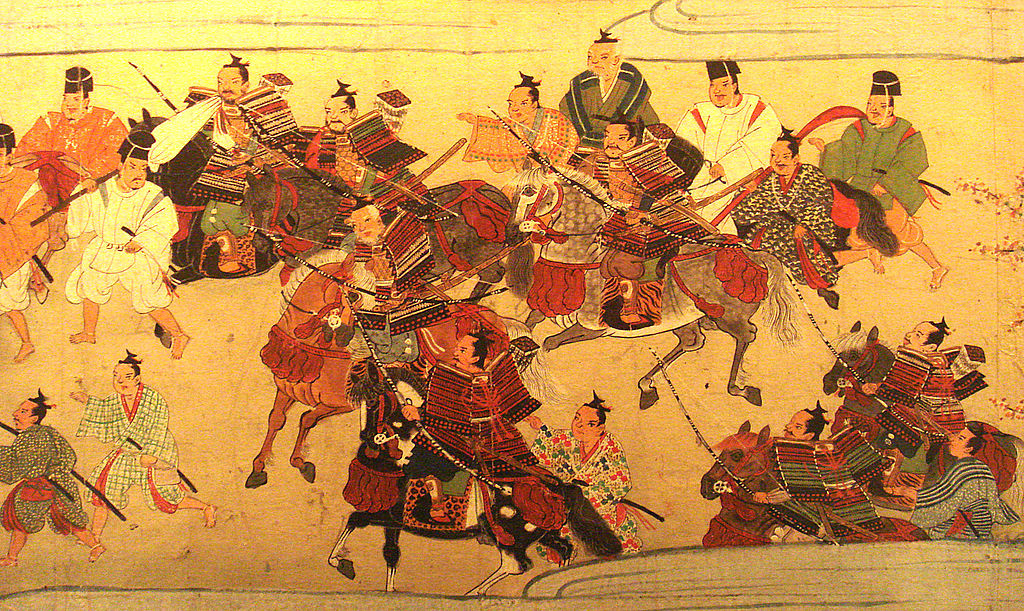
- Not only did the Tale of the Heike help
to create the samurai ideal, it has served as an inspiration for more
writers in more genres than any other single work of Japanese literature.
- Although Shintoism, the native religion
emphasizing the protective powers of supernaturalism, enjoyed widespread
popularity, Buddhism began to play an increasingly important role in premodern Japan,
most notably in the arenas of literature and drama.
- No (translated as "talent" or
"skill"), Japan's classical theater, is a serious and stylized
art form that is produced without most of the artifices of Western theater
such as props and scenery.
Mystical
Poetry of India [100 A.D. to 1500]

- The literary genre of India's medieval era, lyric
poetry, was associated with bhakti, or mystical devotion to
God.
- Bhakti is a populist literary form that
is usually composed by poet-saints of all castes and both genders in their
native tongues.
- Each poem positions the devotee and God in a particular
relationship, but the most popular relationship is that of erotic love
between a male god and a female devotee.
- Bhakti poetry is composed in many
different regional languages and elegizes Siva, Krishna, and other
important Hindu deities.
- The emotive quality of the poems, their ability to
provide social critique and the representation of love that crosses
boundaries between the secular and sacred have made Krishna poetry
appealing and accessible to many groups.
Africa
[1500-1650]

- The founding of the Mali empire is attributed to
Son-Jara Keita, whose life and exploits are the subject of the Son-Jara,
the national epic of the Manding people.
- The rise of ancient Mali in the thirteenth century
is closely associated with the spread of Islam into the region, which had
begun in the seventh century.
- The principal custodians of the oral tradition are
professional bards, known among the Manding as dyeli or belein-tigui.
- The epic of Son-Jara developed by
accretion, which together with its oral transmission may account for its
three distinct generic layers.
- The ideological function of the epic is the
construction of a Manding common identity under a founding hero.
The
Renaissance [1500-1650]

- During the Renaissance, notions of Europe's and of
humankind's centrality in the world were challenged and partially
discredited by advances in scientific theory, a rediscovery of Greco-Roman
culture, and the so-called discovery of the Americas.
- The Renaissance reached its peak at different times
in different cultures, beginning in Italy with the visual arts and, nearly
two centuries later, working its way as far as England, where its
achievements are most recognized in drama.
- An interest in the nature of this life rather than
in the life to come is of central importance in the works of Petrarch and
Erasmus.
- The Renaissance tendency toward perfection is well
illustrated by Machiavelli's ideal prince and Castiglione's ideal
courtier, but is also illustrated in the reworking of older literary
traditions such as in Ariosto's Orlando Furioso.
- French rulers and aristocrats adopted the artistic,
literary, and social values of the more sophisticated Italian city-states
such as Castiglione's Urbino.
- Spain's major contributions to Renaissance
literature can be traced to Cervantes and Lope de Vega.
- Works from the English tradition, including Paradise
Lost, Hamlet, and Othello, question the values of the
Renaissance.
Native America
and Europe in the New World [1500-1650]
- On November 8, 1519, Spanish conquistador Hernán Cortés and
a battalion of four hundred soldiers entered and seized Tenochtitlán,
the Aztec capital of the emperor Montezuma.
- Although contact with the Europeans devastated the
cultures of the Native American groups, efforts were also made to preserve
Aztec verbal arts.
- Though many Aztec and Mayan works were translated
into European languages, they were not made available in native languages
for fear of encouraging native religious practices.
- Much of the literary work in Native American
cultures belongs to three basic genres of the oral tradition—song,
narrative, and oratory.
- How is it possible for "outsiders" to
appreciate fully the complexity of literary works that are inextricably
linked to indigenous cultural practices and mores?
Vernacular
Literature in China [1650-1800]

- When the Mongol (Yüan) armies overran northern
China and the southern Sung dynasties, they established themselves as a
dynasty, abolishing governmental principles derived from Confucian
teachings.
- Often building on works of classical literature,
vernacular literature (dealing with sex, violence, satire, and humor)
became known for its ability to elaborate creatively on plots of earlier
works by filling in details or perhaps even by articulating what had been
omitted.
- Under the Ch'ing Dynasty, and especially
during the period known as the "literary inquisition," classical
Chinese writing suffered a devastating blow.
- China's autonomy and cultural self-confidence were
decimated in the eighteenth and early nineteenth centuries, when European
colonial powers began to exert control over China's economy.
Ottoman
Empire [1650-1800]
- On the tenth night of Muharram in 1040 (August 19,
1630), Evliya «elebi dreamed that the Prophet Muhammad
appeared to him and encouraged him to pursue his wanderlust.
- Sometimes traveling in an official capacity and
sometimes traveling as a private individual, Evliya «elebi recorded
his observations in a vivid anecdotal style.
- After the destruction of the Saljuqid state
in the thirteenth century, the Ottomans established themselves as an
independent dynasty in northwestern Anatolia, from which they expanded
into Greece, Macedonia, Bulgaria, and the Balkans.
- Under Mehmed II the Conqueror, the
Ottomans established an architectural style that symbolized their imperial
ambitions, a new legal code, and a policy of imperial expansion. They
continued and enriched Arabic and Persian literary traditions.
Enlightenment
in Europe [1650-1800]
- In the midst of the massive—and often
cataclysmic—social changes that violently reshaped Europe during the
eighteenth century, philosophers and other thinkers championed reason and
the power of the human mind, contributing to the somewhat misleading appellation
of this prerevolutionary period as an "Age of
Enlightenment."
- Because literature was produced by a small cultural
elite, it tended to address limited audiences of the authors' social
peers, who would not necessarily notice the class- and race-specific
values that served as a basis for proper conduct and actions outlined in
poems, novels, and belles lettres.
- The notion of a permanent, divinely ordained,
natural order offered comfort to those aware of the flaws in the actual
social order.
- Reliance on convention as a mode of social and
literary control expresses the constant efforts to achieve an ever-elusive
stability in the eighteenth century.
- By exercising their right to criticize their fellow
men and women, satirists evoked a rhetorical ascendancy that was obtained
by an implicit alliance with literary and moral tradition.
- Though she outwardly declared her humility and
religious subordination, Sor (Sister) Juana InÈs de la
Cruz managed to advance claims for women's rights in a more profound and
far-reaching way than anyone had achieved in the past.
Popular Arts
in Pre-Modern Japan [1650-1800]
- To sustain peace, the Tokugawa shoguns expelled
Portuguese traders and Christian missionaries, who tended to play one
feudal baron against another in order to subvert local power, and
prohibited any Japanese from traveling abroad.
- During this period of peace and stability, the role
of samurai retainers in maintaining shogunal authority
shifted from warriors to bureaucrats.
- Often indifferent to tradition, this new merchant
class developed a culture of its own, reflecting the fast pace of urban
life in woodblock prints, short stories, novels, poetry, and plays.
- Ihara Saikaku is known as a founder of
new, popular "realistic" literature, writing about the foibles
of the merchant class in urban Osaka.
- Cultivating the persona of the lonely wayfarer,
Matsuo Basho's austere existence was the antithesis to Saikaku's prosperity.
- Ueda Akinari is known for his successful
insinuation of the supernatural into everyday life and his keen
understanding of the irrational implications of erotic attachment.
Revolution
and Romanticism in Europe and America [1800-1900]
- Emerging in the late eighteenth century and
extending until the late nineteenth century, Romanticism broke with
earlier models of thinking that were guided by rationalism and empiricism.
- After the American and French revolutions, faith in
social institutions declined considerably; no longer were systems that
were organized around hierarchy and the separation of classes considered
superior.
- As manufacturing and industrialization developed,
resulting in a decline in the agricultural economy, a "middle
class" began to emerge in England and other parts of Europe.
- Breaking with the Christian belief that the self is
essentially "evil" and fallible, Romantic poets and authors
often explored the "good" inherent in human beings.
- As the middle class rose to ascendancy in the
nineteenth century, new approaches to science, biology, class, and race
began to shake middle-class society's values.
- Imagination was seen as a way for the soul to link
with the eternal.
- The new thematic emphases of poetry—belief in the
virtues of nature, the "primitive," and the past—engendered a
form of alienation that was described in the "social protest"
poetry of Romantic poets.
Urdu Lyric
Poetry in Northern India [1800-1900]
- The most popular lyric genre of Urdu, a hybrid
language developed from the interaction of Hindi and Persian, is the ghazal.
- Derived from the Arabic praise poem (qasidah), ghazal reflects
on love—human, divine, and spiritual.
- Formal and thematic conventions are important to
the ghazal tradition.
- Mirza Asadullah Khan, or Ghalib (Conqueror)
as he is more commonly known, is considered the most important poet
associated with this tradition.
Realism,
Naturalism, and Symbolism in Europe [1800-1900]
- Nourished by the political and social aspirations
of the middle class, nationalism and colonialism came to dominate the
nineteenth century in Europe.
- Though its first literary use was in Germany at the
turn of the nineteenth century, the term realism did not
become a commonly accepted literary and artistic slogan until French
critics began to use it in the 1850s.
- Though the realist program made innumerable
subjects available to art, it narrowed the themes and methods of
literature.
- Contrary to what they might think, realist writers
did not make a complete break with past literary conventions, nor did they
follow "to the letter" the theories and slogans they propounded.
- As prose looked outward at the world around it,
poetry looked inward at its very construction as language.
- Inspired by Baudelaire's The Flowers
of Evil, Symbolism's manifesto appeared in 1886, thereby not including
the great midcentury poems by Baudelaire, Verlaine,
Rimbaud, and MallarmÈ.
The 20th Century:
European Modernisms [1900s]
- In the twentieth century, modernization was used in
tandem with colonization as a means to legitimize the often forced
adoption of Western concepts of "progress" in different parts of
the world. As such, modernization also became a stimulus for movements
that rejected "progress" in favor of "tradition."
- European writers and thinkers looked beyond models
of scientific rationalism for means of expressing knowledge of the world
and lived experience that could not be apprehended by intellect alone.
- Literary and linguistic systems were seen as games
in which "pieces" (words) and "rules" (grammar,
syntax, and other conventions) were combined with playfulness and
sometimes with pathos to emphasize the instabilities of language.
- The twentieth century is sometimes called a
"century of isms" as different groups of European artists and
intellectuals attempted to give expression to contemporary history and
subjectivity.
- Western modernism is too conceptually limited to
describe much of the cultural productions of older nations in North
America such as the Navajo, Zuni, and Inuit.
Decolonization
[1900s]
- With the spread of Western colonialism from Europe
and North America to Asia, Africa, and South America also came the spread
of its by-product; Western modernism.
- Though early criticisms were leveled at former
colonial subjects who wrote in the colonizer's language since such writing
was considered to reflect "impoverished" experiences, more
recent evaluations point to the ways that the writings of former colonial
subjects have enriched European languages.
- Though social-realist movements varied considerably
within Chinese, Indian, and Soviet contexts, in general they denounced the
bourgeois and colonialist values expounded in Western art and literature.
- Though English-language literatures are well known
outside India, literatures in regional languages such as Kannada, Urdu,
Sindhi, Bengali, Hindi, and Tamil represent other aspects of Indian life.
- The literary traditions of the diverse countries
that the West calls "the Middle East" reflect the multiple
histories and cultural traditions of the region.
- In addition to experiences of Western colonialism
in Africa, African writers also address issues related to the slave trade
and to the African diaspora.
- The generally political nature of magical realism
in South American writing was often missed by earlier generations of
Western readers, who were too amazed by the imaginative creativity of
magical realism.
[Pictures are from Google]

Komentar
Posting Komentar